Introduction: The Evolution of Portable Retro Gaming
The retro gaming landscape has undergone a massive transformation over the past few years, evolving from a niche hobby reserved for emulation enthusiasts into a mainstream phenomenon. As gamers seek to relive the golden eras of the 8-bit, 16-bit, and 32-bit generations, hardware manufacturers have stepped up to bridge the gap between vintage software and modern convenience.
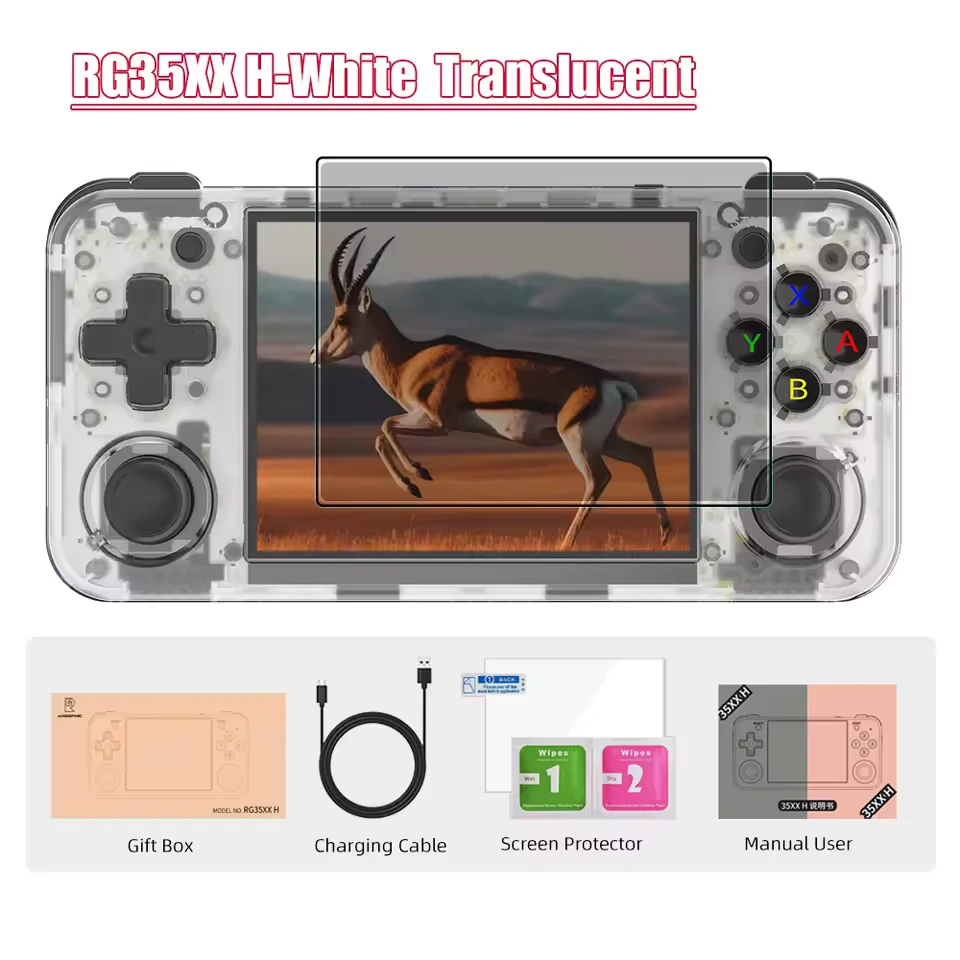
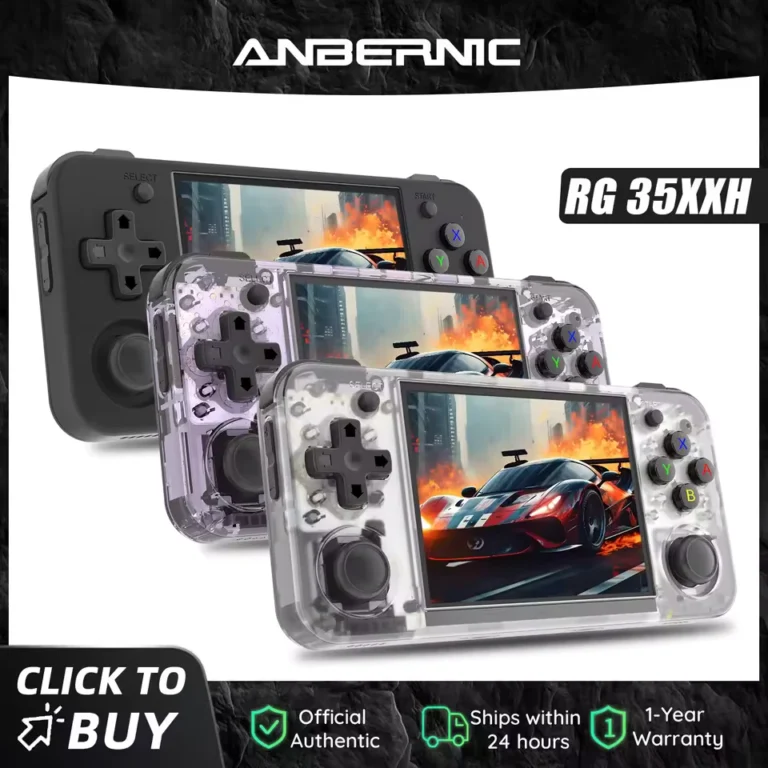
Among these pioneers, Anbernic has consistently stood out as a premier brand, known for delivering high-quality build materials, accurate emulation, and excellent price-to-performance ratios. The Anbernic RG35XX H represents the latest evolutionary step in this journey, packing robust processing power into a highly requested horizontal form factor.
For years, vertical handhelds dominated the budget space, but many gamers complained of hand fatigue during extended gameplay sessions. The “H” in the RG35XX H signifies its horizontal orientation, addressing ergonomic concerns while significantly upgrading internal specifications.
Consoles For Playing Video Games
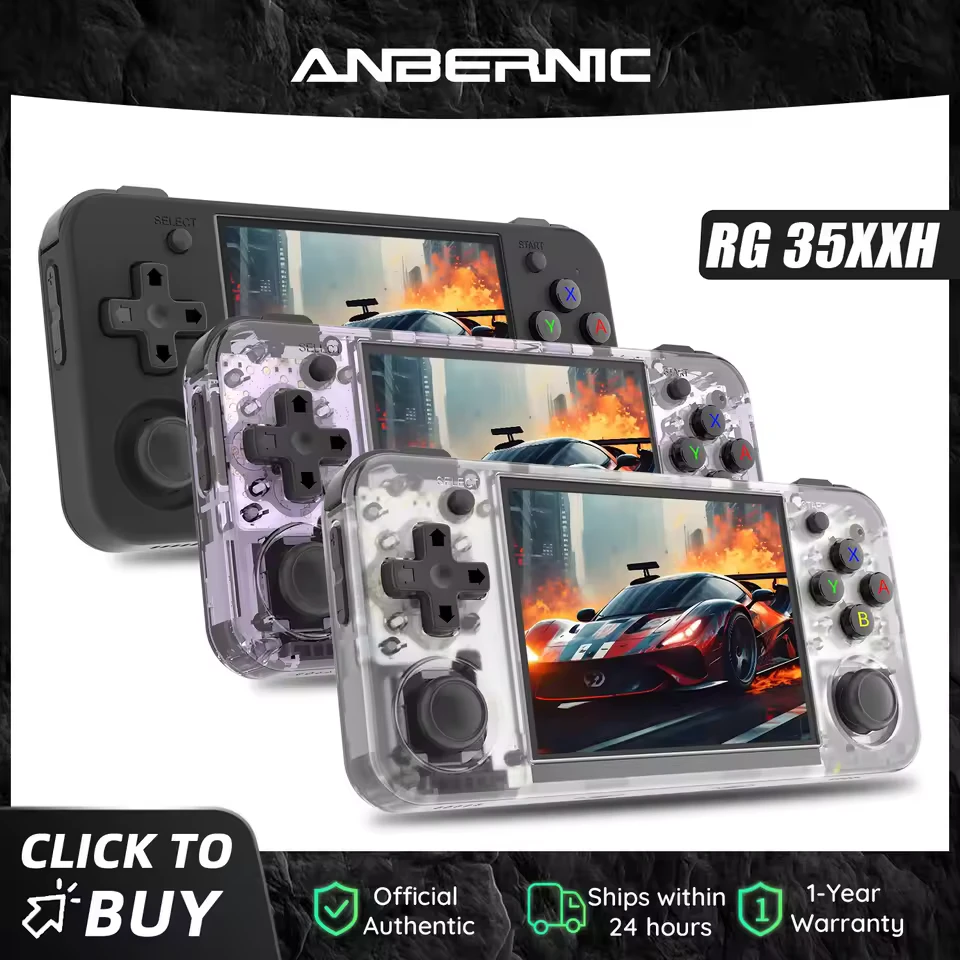
Equipped with an upgraded 64-bit chipset, upgraded dual-band wireless capabilities, and dual analog joysticks, this pocket-sized powerhouse is engineered to tackle demanding emulation tasks that its predecessors struggled to handle. Whether you want to glide through classic 2D platformers or dip your toes into 3D environments from the fifth and sixth console generations, understanding what makes this hardware tick is essential to maximizing your retro gaming investment.
Detailed Hardware Specifications and Architecture
To fully appreciate the capabilities of the Anbernic RG35XX H, one must examine the internal architecture that drives its performance. Unlike basic microcontrollers found in cheaper clone systems, this device utilizes a true system-on-chip (SoC) framework optimized for real-time emulation workloads. Below is an exhaustive breakdown of the hardware components that power this portable setup.
Processor and Processing Framework
At the core of the RG35XX H is the powerful H700 quad-core ARM Cortex-A53 processor, clocked at a stable 1.5GHz. The migration to an ARM Cortex-A53 microarchitecture provides a distinct advantage over older architectures by offering natively broader registers and enhanced floating-point calculation performance. This added computing headroom is exactly what allows the system to push past standard 16-bit emulation and confidently dive into demanding 64-bit platforms.
Complementing the quad-core CPU is a dual-core Mali-G31 MP2 graphics processing unit. The GPU handles vector scaling, texture mapping, and frame-buffer rendering, ensuring that 3D geometric textures scale naturally onto modern display panels without choking the CPU. Together, this silicon pairing manages resources efficiently to maintain stable frame rates while keeping thermal output down, avoiding the performance degradation that typically plagues unoptimized handheld architectures.
Memory and Expandable Storage Solutions
System memory is another area where the RG35XX H establishes a high baseline. It features 1GB of LPDDR4 random-access memory (RAM). While 1GB might seem modest by smartphone standards, within an optimized Linux environment it provides more than enough bandwidth to cache active ROM files, run retro emulation backends, and handle background system states smoothly.
Storage management is strictly structured through a dual TF/MicroSD card slot layout, which offers maximum flexibility for organizing files:
- TF1/Slot 1 (System Operating OS): Dedicated purely to the Linux operating system kernel, boot configurations, and core emulator configurations. Keeping the OS separated ensures that file corruption in your game directory won’t prevent the device from booting successfully.
- TF2/Slot 2 (Media Storage Expandability): Reserved exclusively for your personal library of digital backups and media files. The slot officially supports MicroSD expansion cards up to 512GB, providing enough storage capacity to house thousands of individual retro games across dozens of vintage systems.
Display Performance and Visual Fidelity
The display panel serves as your primary window into these classic digital worlds, and Anbernic has equipped the RG35XX H with a premium 3.5-inch In-Plane Switching (IPS) screen. Running at a native hardware resolution of 640×480 pixels, the display perfectly matches the historical 4:3 aspect ratio utilized by nearly all legacy home consoles and CRT televisions.
Because it uses a native 4:3 grid array, retro titles scale perfectly without relying on horizontal stretching or uneven pixel filtering that can blur art assets. The underlying IPS technology delivers wide viewing angles and deep color saturation. Furthermore, full OCA (Optically Clear Adhesive) lamination eliminates the internal air gap between the display panel and the outer protective lens, reducing glare, improving contrast ratios, and keeping ambient dust out of the assembly.
Battery Efficiency and Power Delivery Dynamics
To support its portable design, the RG35XX H houses an integrated 3300mAh lithium-polymer battery pack. When combined with the energy-conscious power profiles of the ARM Cortex-A53 processor cores, this capacity translates into roughly 6 to 8 hours of continuous operational runtime, depending on screen brightness levels and emulation complexity.
Charging parameters are managed via a modern USB Type-C interface, requiring a standard 5V/1.5A input profile. It is important to note that the device does not support high-voltage USB-PD (Power Delivery) fast chargers, so sticking to standard USB-A to USB-C charging cables paired with conventional power bricks will protect the internal charging circuitry from overvoltage stress.
Consoles For Playing Video Games
Ergonomics, Layout, and Design Aesthetics
Shifting from a vertical to a horizontal structural form factor brings massive improvements to comfort, button layouts, and daily usability. The physical chassis is sculpted out of durable, high-impact matte plastic, offering a premium texture that resists fingerprints and smudges during intense play sessions.
Primary Controls and Input Layout
The front face of the Anbernic RG35XX H features a classic layout designed to feel instantly familiar to longtime gamers. The directional pad (D-pad) utilizes Anbernic’s signature conductive rubber pad design, striking an ideal balance between stiffness and responsiveness. This ensures that fast directional inputs register reliably without accidental diagonal inputs, which is critical for precision platformers and fighting games.
The face buttons follow the traditional four-button layout, providing deep travel and tactile, springy feedback. Start and Select buttons are aligned neatly near the bottom of the face layout, while dedicated Function (F) and Menu buttons sit along the upper frame, giving you instant access to emulator options like quick-saves and button remapping.
Dual Analog Joysticks Integration
The biggest visual and functional shift from previous entries in the budget line is the inclusion of dual, low-profile analog joysticks. Positioned symmetrically along the lower third of the device face, these sticks feature a textured rubber top that keeps your thumbs from slipping. They rotate smoothly through a complete 360-degree range, unlocking comfortable navigation for 3D game engines and making dual-stick control configurations possible for complex simulation titles.
Shoulder Button Layout and Audio Integration
Along the top shoulder edge, the device features inline L1/L2 and R1/R2 bumper buttons. Instead of stacking them vertically, Anbernic placed them side-by-side with varying heights. This stepped design makes it easy to distinguish between the primary and secondary triggers purely by feel, reducing input errors when playing complex action games.
Audio delivery is handled by an integrated high-fidelity mono speaker located on the bottom edge of the device frame. For private listening sessions, a dedicated 3.5mm stereo auxiliary headphone jack provides clean audio without background electrical hum, letting you enjoy classic chiptunes exactly as they were composed.
Software Architecture and Emulation Capabilities
Impressive hardware specs mean very little without well-optimized software to run them. The Anbernic RG35XX H runs an open Linux operating system platform that strips away background overhead to maximize emulation performance. Let us examine how the system processes different platform architectures.
Classic 8-Bit and 16-Bit Systems
For early console generations, the H700 chipset operates with significant processing headroom. Legacy systems run flawlessly, drawing minimal power and generating virtually zero heat. Advanced graphic enhancement filters—such as retro CRT scanline filters or high-definition pixel smoothing—can be applied via software backends without causing any frame drops.
The 32-Bit and 64-Bit Eras
Moving into the fifth generation of home video game consoles is where the 64-bit architecture truly shows its value. Systems that require heavy floating-point math run at full speed with exceptional accuracy. The 640×480 screen resolution matches these eras perfectly, rendering early 3D polygons with a crisp clarity that far surpasses how they looked on old composite televisions.
Handheld Platform Emulation
Portable systems from the late 90s and early 2000s translate beautifully to the RG35XX H. Early handheld libraries scale cleanly onto the bright IPS screen. For later 32-bit portable platforms, the system’s processor handles special visual effects, transparency layers, and heavy compute cycles smoothly, providing an arcade-perfect experience on the go.
Advanced Emulation Boundaries: Sixth Generation and Beyond
The true benchmark for budget retro handhelds is how well they handle late-90s home consoles and early-2000s portable systems. Thanks to the 1.5GHz H700 processor, the RG35XX H handles a large portion of these demanding libraries at playable frame rates. While some high-profile titles may require minor adjustments—such as enabling frame-skipping or dropping the internal rendering resolution—the vast majority of these games run smoothly right out of the box.
| Console Generation | Emulation Stability | Optimal Performance Tweaks |
|---|---|---|
| 8-Bit / 16-Bit Consoles | Flawless (100% Speed) | None needed; shaders and filters run perfectly. |
| 32-Bit Early 3D | Excellent (100% Speed) | Enable native resolution scaling for best results. |
| 64-Bit Home Systems | High (90-100% Speed) | Use optimized emulation cores for demanding titles. |
| Advanced 3D Handhelds | Very Good (85-100% Speed) | Utilize 1x rendering resolutions where needed. |
| Sixth-Gen Consoles (Select) | Moderate (Varies by Title) | Enable mild frame-skipping for heavy 3D titles. |
Wireless Connectivity and Modern Networking Features
Unlike basic retro handhelds that isolate the user from modern networking, the Anbernic RG35XX H includes built-in wireless hardware that opens up a wide array of connected features.
Dual-Band Wi-Fi Integration
The onboard network adapter supports dual-band 2.4GHz and 5G Wi-Fi connections under standard 802.11a/b/g/n/ac protocols. This high-speed wireless connection unlocks several convenient features:
- RetroAchievements Synchronization: Connect your device directly to the popular online platform to unlock real-time achievements and track your progress across retro titles.
- Over-the-Air (OTA) Updates: Update the device operating system, emulation cores, and system menus directly over your home network without needing to remove the MicroSD card.
- Netplay Multi-Device Matchmaking: Host or join local multiplayer sessions with other Anbernic Linux devices on the same Wi-Fi network, letting you play multiplayer classics just like sitting on the couch together.
Bluetooth 4.2 Controller Pairing
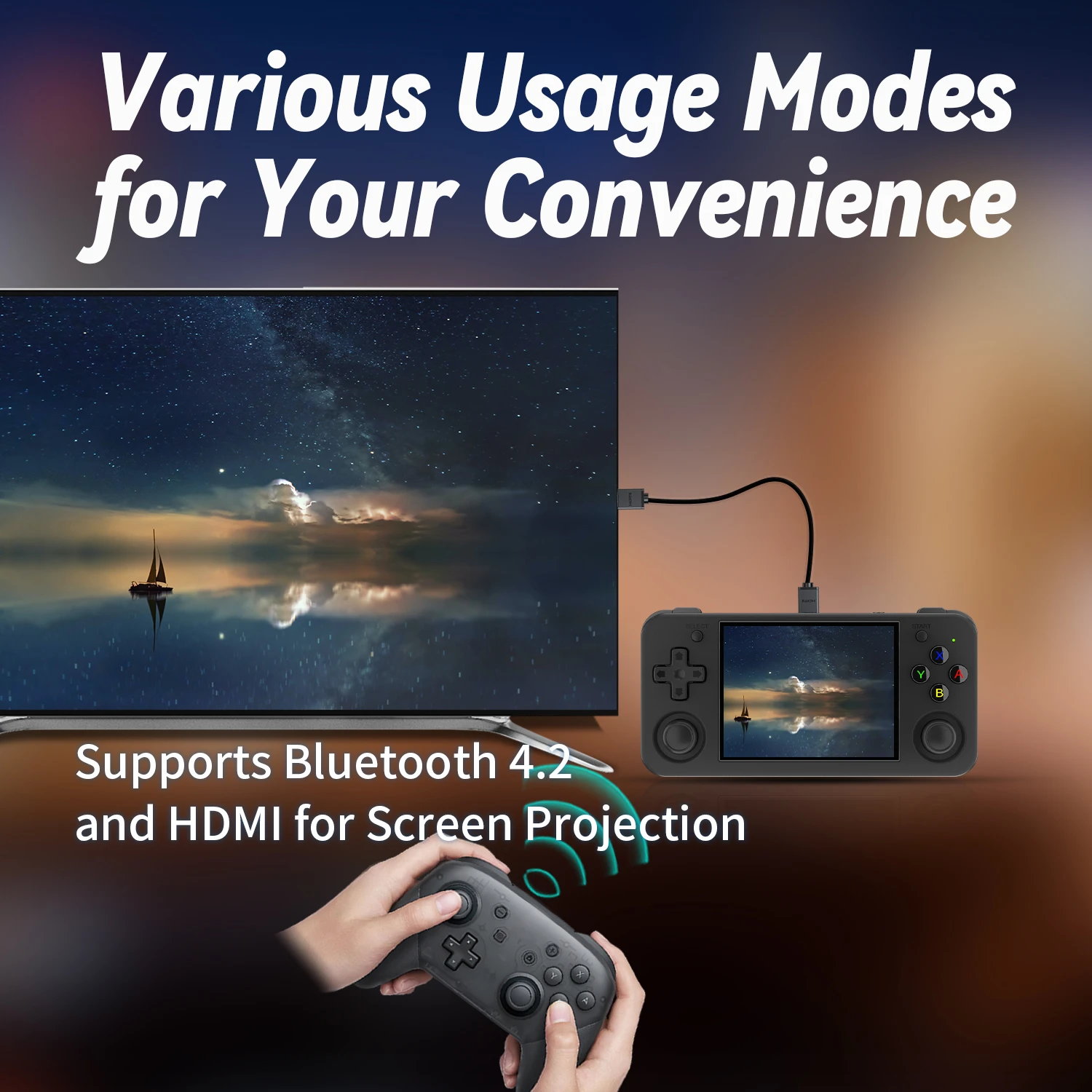
An integrated Bluetooth 4.2 radio chip lets you pair external wireless peripherals with the handheld. You can connect modern wireless gamepads directly to the device, making it easy to play multiplayer games or enjoy comfortable long-distance sessions when using the console’s external video output options.
HDMI Television Output and Monitor Projection
On the top edge of the case sits a standard Mini-HDMI output port. By running a simple conversion cable from the device to a modern flat-screen television or desktop monitor, you can transform the portable unit into a home entertainment console. Once connected, the internal display turns off, and the system outputs a clean digital video feed directly to your large display, automatically mapping your inputs to the big screen with minimal latency.
Optimizing Firmware and Custom Ecosystems
The RG35XX H ships with a fully functional, user-friendly stock Linux operating system that is ready to use right out of the box. However, the open-source nature of the architecture means enthusiasts can easily install custom firmware (CFW) to unlock advanced features and wring every drop of performance out of the hardware.
Stock Linux Operating System vs. Custom Firmware
The factory firmware stands out for its straightforward menu navigation and reliable default configurations. It is an excellent choice for casual users who want to jump straight into playing games without dealing with deep software settings. On the other hand, upgrading to popular custom firmware options—such as Knulli, MuOS, or modified RetroArch builds—unlocks a completely new level of control over the system.
Benefits of Upgrading System Software
Installing custom operating firmware offers several major advantages for power users:
- Advanced Interface Customization: Replace the basic stock menus with highly customizable themes, custom background art, and smooth transition animations.
- Precise Performance Optimization: Gain access to deep processor controls, allowing you to fine-tune CPU speed and memory allocation for demanding 3D games.
- Enhanced RetroArch Emulation Options: Unlock advanced emulation features like manual button remapping, quick-save state slots, and custom screen layouts for different retro platforms.
Comparison: Anbernic RG35XX H vs. Vertical RG35XX Plus
Choosing between the horizontal RG35XX H and its vertical sibling, the RG35XX Plus, often comes down to personal taste and ergonomics. While both devices share the exact same underlying H700 processor and 1GB of LPDDR4 RAM, their physical designs create entirely different user experiences.
The vertical layout appeals strongly to retro purists because it mirrors the classic look and feel of old-school handheld systems. However, its taller, narrower frame can feel cramped during long gaming sessions, and it lacks the twin analog joysticks found on the horizontal model. The horizontal design of the RG35XX H distributes its weight more evenly across both hands, providing a comfortable, natural grip that reduces wrist fatigue. Furthermore, the dual analog joysticks make it far easier to navigate 3D game environments, giving the horizontal model a massive advantage when exploring 64-bit and 32-bit console libraries.
Conclusion: The Ultimate Budget Retro Handheld?
The Anbernic RG35XX H stands as an impressive achievement in the budget emulation market. By combining a capable H700 quad-core processor, a gorgeous 3.5-inch laminated IPS screen, and dual analog joysticks into a comfortable horizontal frame, Anbernic has delivered a highly versatile handheld that hits well above its price bracket. Whether you want to relive early 8-bit adventures or dive into complex 3D classics, this device offers the performance, durability, and features needed to satisfy both casual players and dedicated emulation enthusiasts alike.
Consoles For Playing Video Games